A group of Azerbaijani Turk activists,
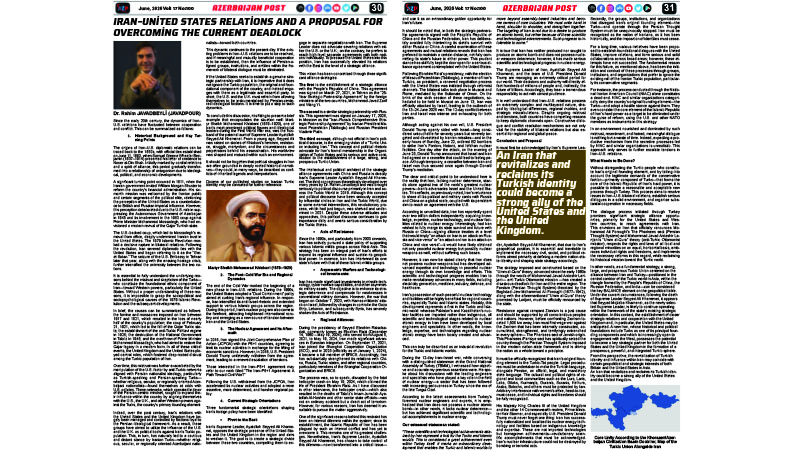
journalists, academics, and civil society figures from various countries around the world have issued a statement expressing concern over the situation of Azerbaijani Turk civil and political activists in Iran.
In the statement, the signatories expressed concern over the increase in arrests, summonses, judicial prosecutions, and the issuance of harsh sentences against civil, political, cultural, and social activists, referring to recent political and security developments in Iran.
The signatories state that over the past year, a significant number of Azerbaijani Turk activists in various provinces of Iran, including West Azerbaijan, East Azerbaijan, Tehran, Alborz, Ardabil, Zanjan, Qazvin, and Hamadan, have been arrested or imprisoned. The statement also expresses concern over the judicial proceedings in the cases of these activists and the failure to observe certain principles of fair trial.
Another section of the statement criticizes the use of peaceful cultural and linguistic activities, as well as activities related to social identity, as grounds for judicial prosecution. It emphasizes the need to respect freedom of expression, peaceful assembly, freedom of association, and the right to preserve cultural and linguistic identity.
The signatories also expressed concern about the health conditions of some imprisoned Azerbaijani Turk activists and called for their access to medical services and necessary medications.
The statement provides a list of imprisoned Azerbaijani Turk activists, as well as individuals who have been released on bail but continue to face judicial cases or issued sentences.
At the conclusion of the statement, the signatories called on governments, international organizations, United Nations human rights mechanisms, and human rights defenders to closely monitor the situation of these prisoners and take action to ensure respect for their rights, fair trial standards, and the health and dignity of prisoners.
The statement has been signed by numerous Azerbaijani Turk activists and public figures residing in various countries, including Canada, Turkey, Sweden, Germany, the United States, the Republic of Azerbaijan, France, the United Kingdom, Norway, Switzerland, Austria, Australia, Denmark, and Finland.
Statement on the Situation of Azerbaijani Civil and Political Activists in Iran
Amid the recent political and security developments in Iran, including the consequences arising from the military confrontation between the United States, Israel, and Iran, the country’s civic and political space has become subject to even broader restrictions. Numerous reports published by various sources indicate that in recent months security measures targeting citizens, civil society activists, journalists, academics, and political activists have increased significantly. A large number of individuals have been arrested, subjected to criminal prosecution, or brought to trial in different parts of the country. It has also been reported that some of these individuals have received severe sentences, including lengthy prison terms and, in certain cases, the death penalty. These developments have raised serious concerns regarding compliance with the principles of fair trial and the protection of fundamental human rights.
Among those affected are Azerbaijani civil and political activists, whose activities are primarily aimed at advocating for the rights of Azerbaijani Turks. Over the past year, a considerable number of Azerbaijani activists have been arrested and imprisoned in various provinces, including West Azerbaijan, East Azerbaijan, Tehran, Alborz, Ardabil, Zanjan, Kazvin and Hamadan. Others continue to face criminal charges, repeated summonses, security restrictions, or judicial precautionary measures. Those currently imprisoned are facing lengthy prison sentences. Most have been prosecuted and convicted on security-related charges such as “forming or joining an illegal group with the intent to disrupt national security,” “assembly and collusion to commit crimes against national security,” and “propaganda against the state.” This situation has negatively affected not only their personal liberty but also the ability of Azerbaijani Turks to engage in peaceful civic and cultural activities.
According to available information and reports, judicial proceedings against these activists have, in many cases, fallen short of the requirements of a fair trial. Reports indicate that some defendants were denied timely and effective access to legal counsel of their own choosing, court hearings were conducted within an extremely short period, they were not given adequate opportunity to review their case files or prepare an effective defense, and in some cases allegations have been made of security pressure, prolonged interrogations, and attempts to obtain confessions through harassment, ill-treatment, and threats. Such practices are incompatible with the fundamental principles of fair trial and Iran’s legal obligations.
There are also serious concerns regarding the assessment of evidence in these cases. According to published information, convictions of Azerbaijani activists have, in many instances, been based primarily on reports prepared by security agencies, while peaceful activities related to cultural, linguistic, and social identity have been used as grounds for criminal prosecution. This is despite the fact that freedom of expression, freedom of peaceful assembly, freedom of association, the right to participate in public affairs, and the right to preserve one’s cultural and linguistic identity are fundamental rights recognized both by the Constitution of the Islamic Republic of Iran and by international human rights instruments.
As a State Party to the International Covenant on Civil and Political Rights (ICCPR) and the International Covenant on Economic, Social and Cultural Rights (ICESCR), the Islamic Republic of Iran is obligated to respect the rights and freedoms guaranteed under these treaties. These obligations include freedom of expression, freedom of peaceful assembly, freedom of association, the right to a fair trial, the presumption of innocence, the right to legal counsel, the prohibition of compelled confessions, the prohibition of cruel or inhuman treatment, and the right to the highest attainable standard of health. Effective implementation of these obligations, particularly in cases involving civil and political activists, is an essential requirement of the rule of law and respect for human rights.
We believe that the protection of public security must never serve as a justification for restricting the fundamental rights of citizens, undermining fair trial guarantees, or criminalizing peaceful civic activities. Respect for human rights, judicial independence, adherence to the principle of proportionality in the use of criminal sanctions, and the protection of defendants’ rights are among the most important indicators of a fair judicial system governed by the rule of law.
There are also alarming reports concerning the health conditions of several Azerbaijani prisoners. According to these reports, a number of detainees suffer from various illnesses and, despite requiring specialized medical care, have faced restrictions or delays in accessing healthcare services, transfer to medical facilities outside prison, or obtaining essential medications. Denying prisoners access to adequate medical care is not only inconsistent with domestic regulations, including the Executive Regulations of the Iranian Prisons Organization, but also clearly contradicts states’ obligations concerning the right to health as well as the United Nations Standard Minimum Rules for the Treatment of Prisoners (the Nelson Mandela Rules).
The following
Azerbaijani
activists are
currently
imprisoned:
Amin Taqizadeh, Araz Aman, Ayaz Seyfkhah, Ayat Mehralibeyglu (Yuruş), Bagher Hajizadeh, Reza Salimi, Salar Taher Afshar, Siamak Mirzaei, Samad Heydari, Taher Naqavi, Abbas Lisani, Abdolaziz Azimi Ghadim, Asgar Akbarzadeh, Ali Babaei, Ali Vaseghi, Fatemeh Atashi Khiavi, Karam Mardaneh, Mohammad Maleki, Mahmoud Ojaghlu, Morteza Parvin, Vadoud Asadi, and Yousef Kari.
According to information published by media outlets and human rights organizations, dozens of Azerbaijani activists who have been temporarily released on bail are currently undergoing trial or have received final convictions and are awaiting the execution of their sentences. Among them are:
Araz Ebrahimnejad, Arash Kahpour, Ebrahim Avazzadeh, Abolfazl Ranjbari, Amir Ebrahimlou, Amirhossein Aghaei, Ayoub Shiri, Bahram Alilou, Behzad Dashti, Jalal Koudarilu, Javad Soudbar, Hamed Yeganepour, Hossein Azadi, Hossein Javadzadeh, Davoud Shiri, Ramin Eslami, Reza Pahlavaniyan, Saeed Minaei, Soheil Digar, Abbas Alilou, Ali Kheyrjou, Morteza Nourmohammadi, Mehrdad Ghaderi, Naser Razmjou, Yousef Salahshour, Younes Marami, Ebrahim Asemani, Karim Esmailzadeh, Milad Balesini.
We, the undersigned, express our deep concern regarding the situation of Azerbaijani civil and political activists and call for the full respect of their fundamental rights in accordance with Iran’s legal obligations and international commitments. We also urge governments and all international human rights mechanisms - including the United Nations Special Rapporteurs, the United Nations Independent International Fact-Finding Mission on Iran, international organizations, and human rights defenders - to closely monitor the situation of these prisoners, observe the judicial proceedings against them, and employ all available legal and diplomatic means to ensure compliance with fair trial standards, protect their health and dignity, and prevent any further violations of human rights.
Signatories (in alphabetical order):
Abdollah Amir Hashemi (Sweden), Adel Farajollahi (Turkiye), Afsaneh Afshar (Sweden), Afshar Abbasi (Germany), Ahad Vakili (Canada), Akbar Anvari (Turkiye), Akbar Dabbagh Dilmaghani (Switzerland), Ali Ebrahimi (Belgium), Ali Enteshari (USA), Ali Eshghi (Azerbaijan), Ali Hamzehzadeh (Turkiye), Ali Rezaei (Sweden), Ali Soleymani (United States), Alireza Ardabili (Sweden), Amir Mahdipour (Canada), Arash Effati (Turkiye), Arash Mokaridust (Turkiye), Araz Mostafazadeh (Turkiye), Araz Qaraaghajlou (Austria), Arsalan Kamrani (Finland), Asad Taqizadeh (Canada), Atilla Arfaei (Turkiye), Atilla Mostafazadeh (Turkiye), Ayaz Ebadi (Germany), Azar Farrokhi (Sweden), Babak Bakhtavar (UK), Babak Soltani (Sweden),
Barmak Bashiri (Turkiye), Behrang Bashiri (Turkiye), Behrouz Farrokhi (USA), Behzad Aghdamli (Denmark), Behzad Vaziri (USA), Delbar Hasanbeyli (Azerbaijan), Duman Radmehr (Sweden), Ebrahim Madadzadeh (Sweden), Ebrahim Ramezani (Turkiye), Eldar Khiavi (UK), Eldar Qaradaghli (Sweden), Elham Varshouchi (Australia), Emad Hazratinejad (Turkiye), Eskandar Ali Mirzaei (Canada), Esmaeil Javadi (Turkiye), Faramarz Asgharzadeh (USA), Farhad Majidzadeh (Germany), Gholamreza Pourbagher (Turkiye), Habib Qanbarpour (Turkiye), Habib Sasanian (Azerbaijan), Hadi Qarachay (Norway), Hajar Ebrahimi Dinavar (Turkiye), Hamed Malekoghlu (Turkiye), Hassan Afraz (Norway), Hajar Soltani (Turkiye), Hossein Alimohammadi (Turkiye), Hossein Qaramelikli (Turkiye), Ilgar Ulusoy (Turkiye), Isa Torkoghlu (UK), Jafar Pashtu (Turkiye), Jamshid Zarei (Turkiye), Javad Ranjbar (Canada), Javad Sadeghi Dashkasan (Germany), Javad Sudbar (Turkiye), Jebrail Shokri (Turkiye), Karim Asghari (USA), Laleh Javanshir (Canada), Mahmoud Alizadeh Aghdaregh Jadid (Turkiye), Majid Javadi Araz (Turkiye), Mashallah Razmi (France), Masoud Haray (Turkiye), Mehdi Naeimi (Turkiye), Mehdi Nouri (Turkiye), Mehmet Riza Heyat (Turkiye), Mohammad Hassan Gholami Hamed (Turkiye), Mohammad Reza Avazpour (Switzerland), Mohammad Reza Karimpour (Turkiye), Mohammad Reza Kheshti (USA), Mohammad Reza Rahmanifar (Turkiye), Moharram Kamrani (Turkiye), Mojtaba Najafi (Turkiye), Monireh Akbar Pouran (Canada), Morteza Moradpour (UK), Mousa Barzin (Turkiye), Muhammed Riza Qochi (Turkiye), Naghmeh Novdoust (UK), Naghi Mahmoudi (Germany), Navvab Karimi (UK), Nosrat Behnoud (Canada), Pouya Pourhemmati (Switzerland), Qasem Bodi Benab (Canada), Ramin Jabbari (USA), Reza Dabbaghi Nejad Shateri (Turkiye), Reza Kuleyni (Canada), Reza Talebi (Germany), Saeed Azizi (Sweden), Saeed Davari Nikou (Canada), Sahar Haj Ghanizadeh (Turkiye), Saleh Kamrani (Sweden), Salim Ahmadian (Sweden), Samad Pour Mousavi (Canada), Sara Tampou (Canada), Sattar Sevigin (Sweden), Sevil Dafchi (Canada), Shahin Helali Khiavi (Norway), Shahram Shoghi (Turkiye), Siavash Parsian (Turkiye), Simin Sabri (Norway), Sina Yousefi (Germany), Soheila Karegar (Turkiye), Taghi Salahshour (Turkiye), Taha Kermani (France), Umay Radmehr (Germany), Ural Hatami (Germany), Vahid Bahadori (USA), Vahid Farkhad (Turkiye), Valeh Alizadeh (Turkiye), Yashar Bashturk (USA), Yashar Farzin No (France), Younes Shameli (Sweden), Younes Soltanzadeh (Germany), Yousef Mousavi (Türkiye), Zhaleh Razmi (France), Zia Sadrolashrafi (Canada).